

What Is El Niño?
El Niño is part of a larger climate pattern known as the El Niño-Southern Oscillation (ENSO) a periodic which take place in sea surface temperatures and atmospheric pressure across the central and eastern tropical Pacific Ocean. When sea surface temperatures in this zone rise more than 2°C above average, the event is classified as a Super El Niño.
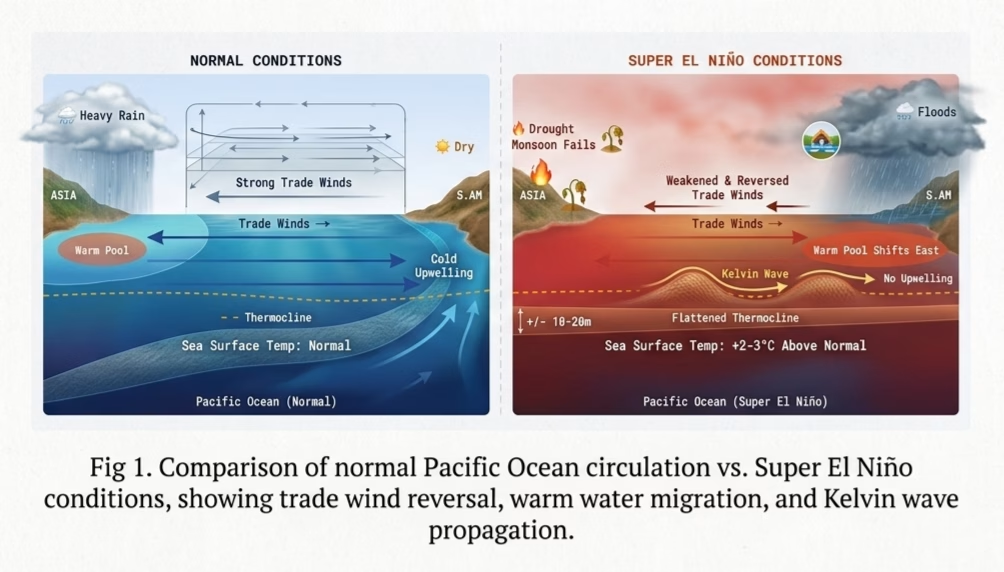
Causes of Super El Niño.
Weakening of the Walker Circulation
The Walker Circulation is one of the reasons behind normal Pacific weather. It is a large-scale atmospheric loop caused by the temperature contrast between the warm western Pacific and the cooler eastern Pacific. When trade winds weaken triggered by random atmospheric disturbances the Walker Circulation slows, allowing warm water to move eastward. In a Super El Niño, this breakdown is both severe and sustained.
Oceanic Kelvin Waves
Once trade winds weaken, oceanic Kelvin waves underwater pulses of warm water travel eastward along the equator beneath the ocean surface. When these waves reach the South American coast, they suppress cold upwelling and dramatically raise surface temperatures. Multiple successive Kelvin waves can accelerate an El Niño into Super El Niño territory.
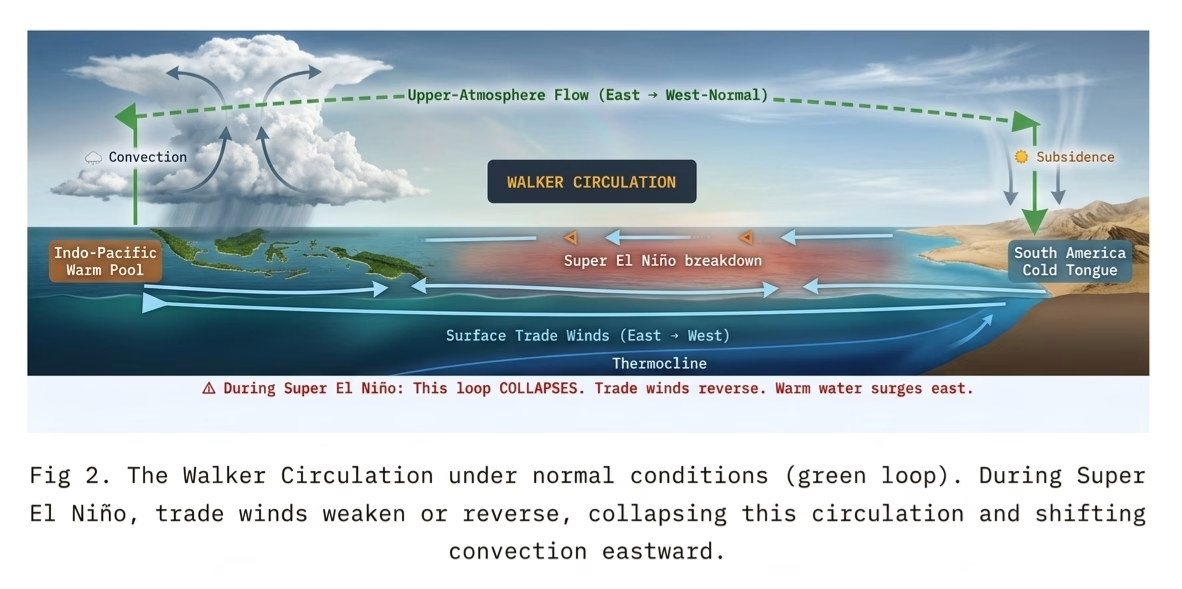
Positive Feedback Loops
Super El Niño is self-reinforcing. As the eastern Pacific warms, atmospheric
convection shifts eastward, further weakening the trade winds allowing even more warm water to accumulate. This classic positive feedback loop intensifies the event beyond ordinary El Niño thresholds.
Climate Change
Scientists increasingly link the increase of El Niño to anthropogenic
climate change. A warmer ocean temperature provides more thermal energy to fuel El Niño. Research suggests climate change may be making extreme El Niño events twice as frequent by end of this century.
Notable Super El Niño Events in History.
Year | Temperature increase | Key Impact |
1982-83 | ~+3.0°C | Severe droughts in Australia, catastrophic floods in South America, $13 billion in damages, fisheries collapse off Peru. |
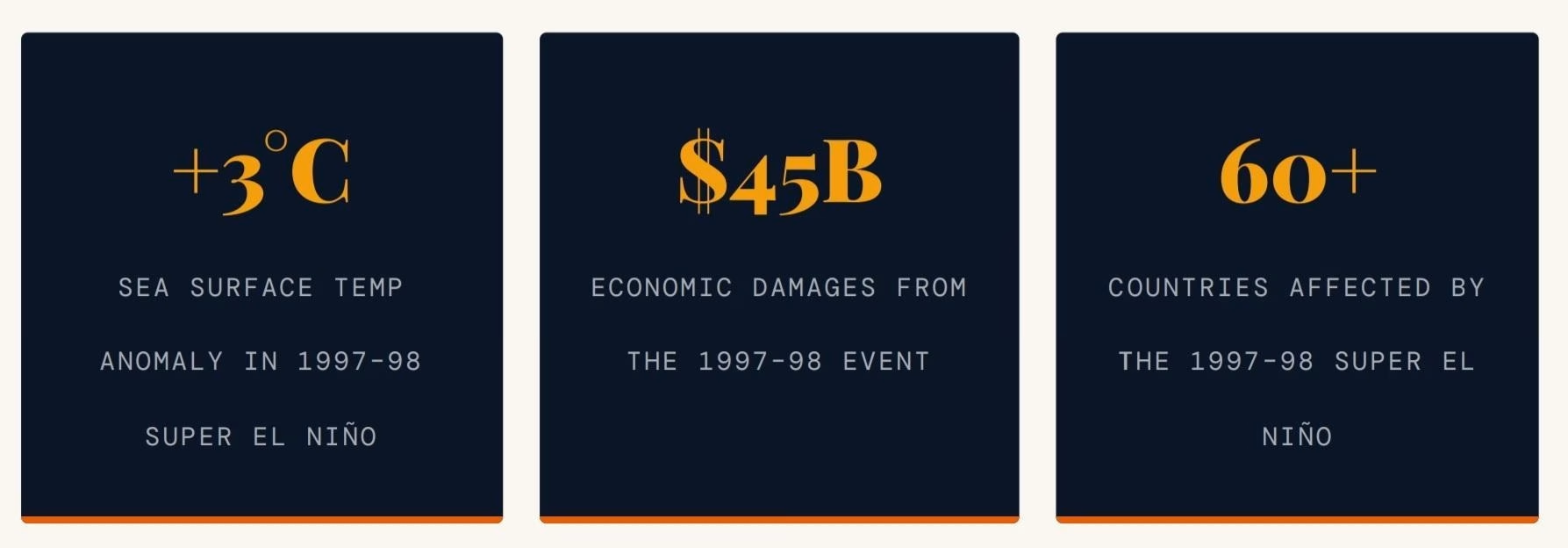
1997-98 | ~+2.8°C | Worst El Niño of the 20th century, 23,000 deaths, $45 billion in damages, record wildfires across Indonesia and Brazil. |
2015-16 | ~+3.0°C | Third global coral bleaching event, 70% of Great Barrier Reef damaged, record global temperatures, severe droughts across Africa and South Asia. |
2023-24 | ~+2.0°C | Compounded by record ocean heat content, hottest year on record, intensified droughts across Amazon and Sahel, catastrophic coral bleaching. |
The 1997–98 Super El Niño affected over 60 countries and triggered the most widespread climate disruption ever recorded a benchmark that the 2015–16 event nearly equalled in its ecological devastation. -ENSO RESEARCH SUMMARY , WORLD METEOROLOGICAL ORGANIZATION |
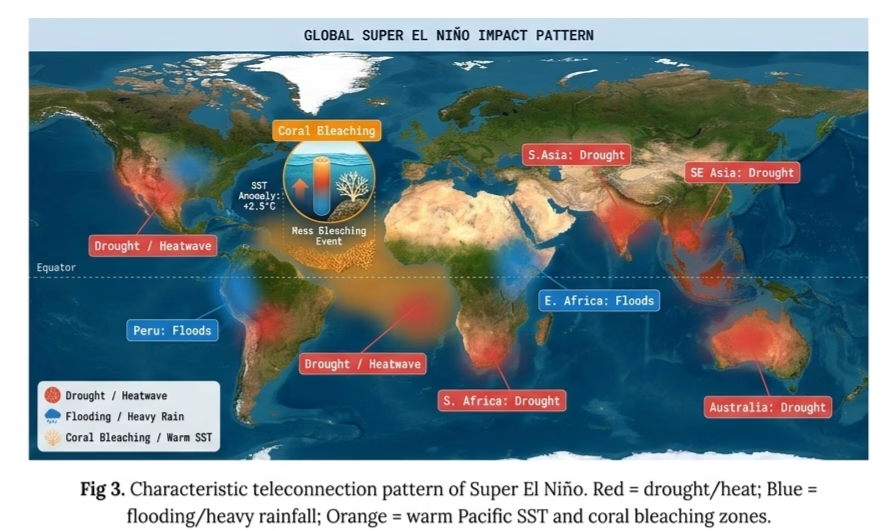
Global Impact Map
Super El Niño does not affect all regions equally. The map below shows the
characteristic global impact pattern during a strong event with droughts and heatwaves dominating South and Southeast Asia, while floods and storms batter the Americas and East Africa.
Regional Effects in Detail
South America Catastrophic flooding, landslides and infrastructure destruction across Peru, Ecuador and Chile as the warm Pacific fuels intense coastal storms. El Niño's birthplace bears the heaviest rainfall burden. | Australia & SE Asia Some of Australia's worst droughts coincide with Super El Niño, triggering catastrophic bushfires and crop failures. Indonesia, Philippines and Papua New Guinea suffer severely weakened monsoons. |
East Africa Heavier-than-normal rainfall leads to flooding, displacement and disease outbreaks particularly cholera and malaria across Kenya, Ethiopia and Somalia. | Southern Africa Reduced rainfall across Zimbabwe, Mozambique and South Africa leads to food insecurity. The 2015–16 El Niño triggered a humanitarian crisis affecting over 40 million people in the region. |
Marine Ecosystems Collapse of anchovy fisheries off Peru, mass coral bleaching events, and disruption to marine mammal populations that depend on cold upwelling zones. The 2015–16 event damaged 70% of the Great Barrier Reef. | Public Health Malaria, dengue fever and cholera outbreaks surge as warmer temperatures and disrupted rainfall create ideal breeding conditions for disease vectors across tropical regions. |
Super El Niño & the Indian Subcontinent
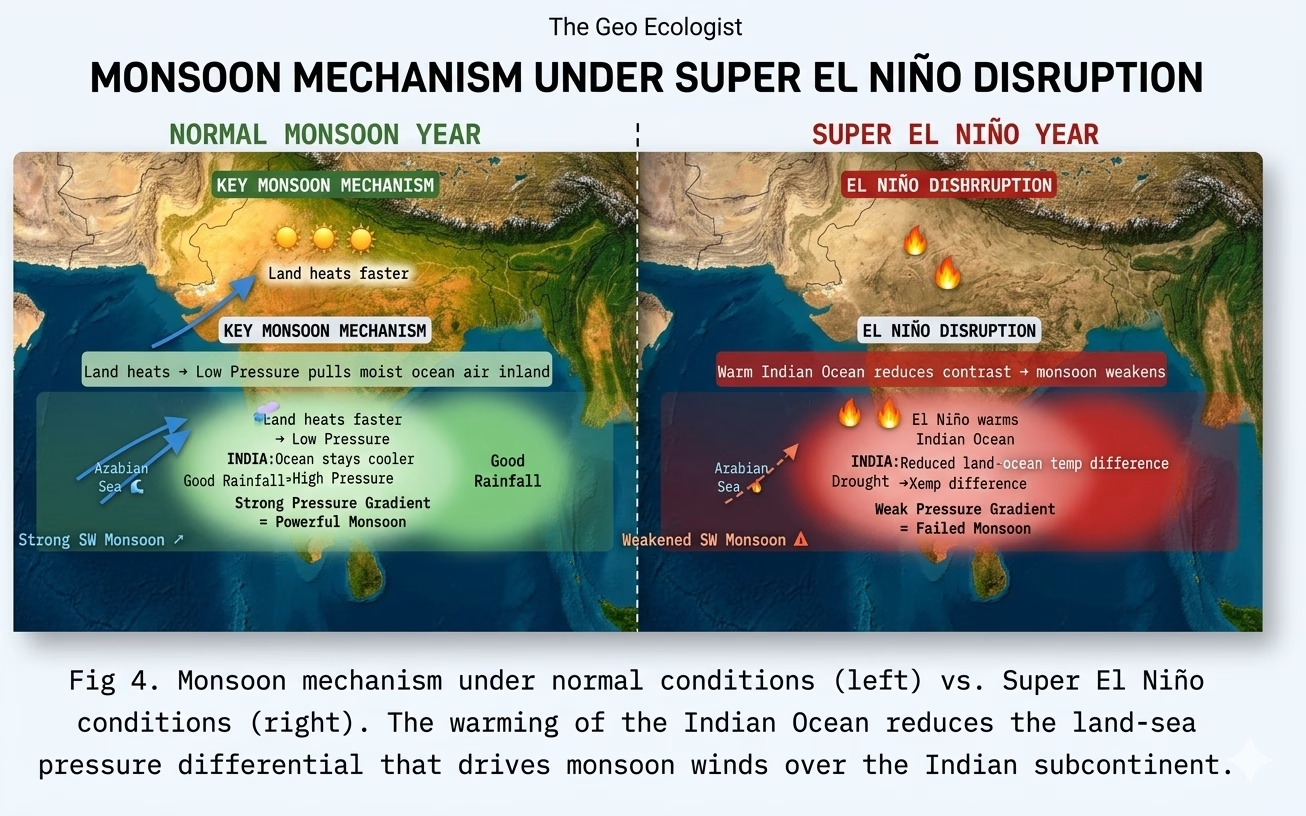
India is particularly vulnerable due to its near-total dependence on the Southwest Monsoon for agricultural water supply. Super El Niño weakens the monsoon by warming the Indian Ocean, reducing the land-sea temperature contrast that drives monsoon winds, and weakening the Madden-Julian Oscillation (MJO). The 2015 Super El Niño contributed to droughts affecting over 330 million Indians.
THE GEOECOLOGIST.
FOR OUR GEOGRAPHY COURSES
VISIT: www.thegeoecologist.com
FOR OUR eBooks (PDF)
VISIT: www.geographyebooks.com

